




Measurement, focus and fibre diameter: how Will and Nina Bennett are keeping wool in their enterprise mix
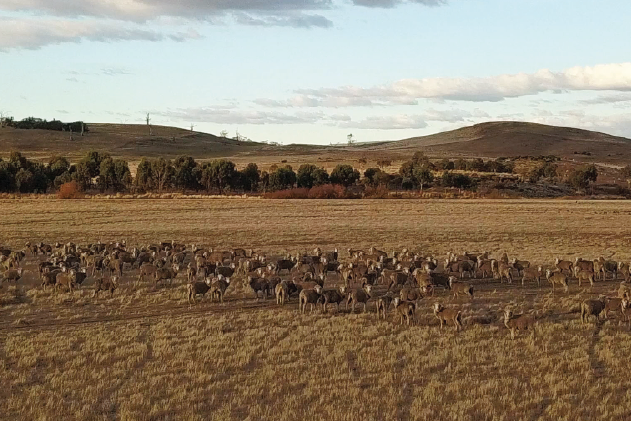
At a time when many producers are reassessing the role of wool in their business, Tasmanian woolgrowers Will and Nina Bennett have taken a different path. Rather than stepping away from wool, the Bennett family made a deliberate decision to stay in the industry but changed how they managed it.
Key take-home messages from Ashby, Tasmania
- Start with a clear business goal, then measure what matters. Will and Nina Bennett’s approach shows that data is most valuable when it supports a defined breeding objective, production target and practical management decisions.
- Benchmarking helps turn assumptions into sharper decisions. Comparing enterprise performance has helped Will and Nina identify what is working, avoid unnecessary complexity and keep the business focused.
- Objective measurement and visual classing can work together. Fleece weight, fibre diameter, body weight and ranking provide structure, while visual assessment helps manage faults, type and practical flock traits.
“When we first came home more than 25 years ago, a lot of people were starting to get out of the industry,” Will said. “We sat down and worked out that we wanted to stay in wool, but we needed to change the way we were doing it.”
For Will and Nina, that change has been built on clear business focus, benchmarking and objective measurement.
Wool makes up about 70 per cent of the Bennett’s diverse mixed-farming business, with the balance largely irrigated cropping and some opportunistic cattle trading. The enterprise mix reflects the property’s land class, with hill country suited to sheep and river flats used for higher-value cropping.
Benchmarking builds confidence through comparison
Soon after returning to the family farm, Will and Nina joined a local benchmarking group, which they credit as being an integral factor in being able to objective measure their business and make evidence-based decisions about management.
According to Will, one of the key lessons from benchmarking has been the value of keeping the business focused.
“One of the things that shows up in benchmarking is the importance on not trying to do too many things,” Will said. “Some potentially lucrative enterprises, such as poppies and high-value seed production, might look attractive, but they can easily become a distraction.”
That focus has helped the business build scale in its Merino enterprise, while using objective and visual measurement to refine the flock over time.
A focus on finer fibre diameter
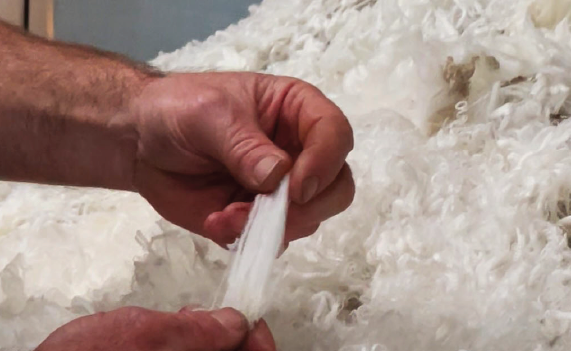
A long-term shift towards finer wool was made with the support of external advice and benchmarking data. Will noted the family looked closely at where the strongest market signals were and selected genetics that aligned with their production goals.
“We decided that if we were going to stay in wool, we were going to go finer,” he said.
Today, the flock produces wool averaging just under 16 micron, with a particular focus on identifying the finest, highest-value lines. Sheep are measured, fleece weighed, body weighed and ranked on a Yalgoo 7/15 custom index.
Visual classing remains an integral part of the Bennett's system, but objective measurement is central to selection decisions.
“There’s a ranking, so it’s a pretty systematic process,” Will said.
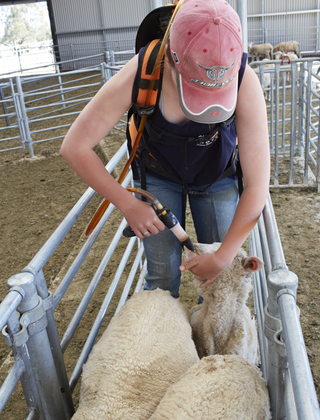
The business uses measurement to identify the animals most suited to its breeding objective, while removing obvious faults through visual classing. Any sheep with clear type or wool faults are culled visually, with the remaining animals ranked on measured performance.
Will noted the premiums for ultrafine (14.6–16.5 µm) and extrafine (<14.5 µm) wool make the extra measurement worthwhile, particularly when it helps separate the highest-value lines.
“If you’ve got the numbers to test and you think you’re going to get a bale in the 12 µm range, it’s certainly worth doing,” he says.
Despite the clear focus on fine wool, Will says the system still needs to manage animal health, welfare and practical production risks. Wrinkle, fleece faults, flystrike risk and worm resilience are all considered through classing and ongoing management.
After more than two decades on this path, the reward is both commercial and personal.
“I get a lot of satisfaction at shearing time,” Will says. “Seeing it come across the board, knowing it has taken 12 months to produce, and seeing the consistency in the flock now, that’s really rewarding.”
The power of individual data
Electronic identification (eID) and individual animal records offer a logical next step for producers wanting to apply a similar approach to the Bennetts. By linking fleece weight, fibre diameter, body weight, classing decisions and lifetime performance to individual animals, eID can make it easier to identify which sheep are driving value and which are not paying their way.
For Will, the principle is not about collecting data for the sake of it. It is about using information to make sharper decisions.
Benchmarking has played a similar role at the business level. It has helped compare enterprises, test assumptions and highlight where management changes are making a difference.
“It made us measure everything really well,” Will says. “You nail down on every enterprise and work out what is really happening.”
For woolgrowers considering how data might fit into their own business, Will’s approach offers a clear message: start with the business goal, keep the system focused, measure the traits that matter and use the information to make decisions.
The result is not a more complicated enterprise. Done well, measurement can make the business simpler, sharper and more confident.
Bring out the best through management
To get the best out of their finely tuned genetics, the Bennetts apply the same discipline to flock nutrition and reproduction. Will, Nina and the Ashby team manage their ewes to maintain around condition score three (CS3) as evenly as possible through the year, rather than allowing them to slip and then trying to recover condition before joining or lambing.
“If you can keep them in reasonable condition the whole way through, you’re not suddenly having to get them up a condition score,” Will explained.
The Bennetts have also refined their flock structure over the years. Enough Merino ewes are joined to breed replacements, while surplus Merinos are joined to terminal sires. Crossbred lambs are sold as stores, reducing the number of lambs carried through winter and allowing the business to run more ewes.
This article first appeared in the AWI Extension TAS Newsletter July 2026. Reproduction of the article is encouraged and should be attributed as follows: This article was first published in the AWI Extension TAS Newsletter.