




East Coast woolgrower joins AWI Extension TAS Producer Advisory Panel
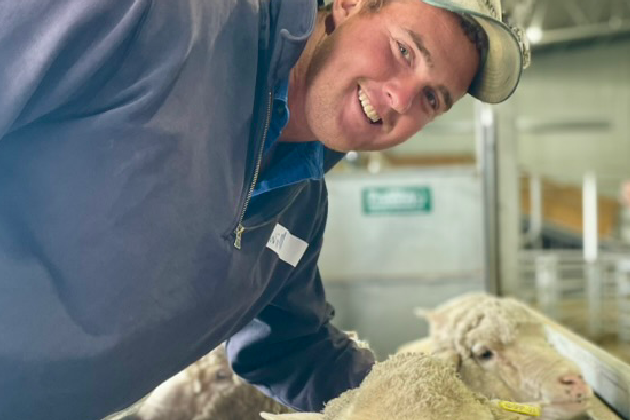
East Coast woolgrower, Will Fergusson, has been appointed to the AWI Extension Tasmania Producer Advisory Panel (PAP), bringing strong regional representation, strategic insight and a deep commitment to Merino wool production.
Will is a third-generation woolgrower at Grindstone Bay Pastoral, a multi-generational family farming business managing approximately 9,000 hectares across owned and leased country on Tasmania’s East Coast. The enterprise runs 10,000 Merino ewes joined to both Merino and terminal sires, 4,000 Merino wethers, alongside cropping and cattle enterprises. Wool is a central economic and strategic pillar of the mixed farming operation.
“I am passionate about contributing to the ongoing profitability and sustainability of the Tasmanian wool industry,” Will said. “Wool is a core part of our business and our future.”
A graduate of Marcus Oldham College, Will returned to the family enterprise after completing his studies and gaining experience with leading operations including Nerstane Merino Stud and Nareeb Nareeb Merino Stud. This blend of formal education and practical stud and commercial exposure has shaped his strong focus on whole-of-business decision making, governance and continuous improvement.
Commitment to extension and adoption
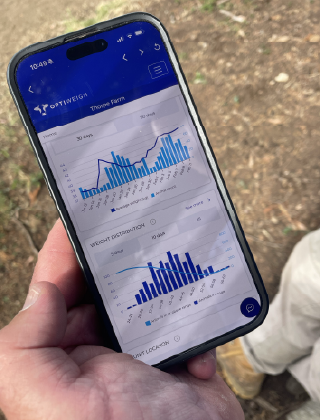
Grindstone Bay Pastoral has long been an active participant in extension and adoption programs, including strong engagement with AWI-supported initiatives. The business uses electronic identification, objective measurement, data analysis and independent professional advice to guide breeding and management decisions.
“This hands-on experience with best-practice adoption gives me a solid understanding of the aims and operation of AWI Extension TAS, both as a participant and as a beneficiary of its work,” Will said.
A systems-based, strategic mindset is a key strength Will brings to the panel. Within their own operation, the Fergusson family works closely with external consultants to ensure structured planning, accountability and regular review.
“That process has reinforced the importance of clear objectives, practical delivery and strong feedback loops,” he said. “Those principles align closely with the role of the Producer Advisory Panel in guiding extension priorities and ensuring programs are relevant and impactful for producers on the ground.”
Will currently serves as President of the East Coast Producers Group, providing him with strong connections across the region and direct insight into the challenges and opportunities facing local woolgrowers.
“This role requires active engagement with producers across different enterprise sizes and systems,” he said. “It positions me well to represent regional perspectives and feed grassroots intelligence into the AWI Extension TAS network.”
He is also a member of the Rabobank Client Council, broadening his exposure to wider industry trends, market dynamics, risk management and innovation across Australian agriculture.
“That experience has strengthened my ability to think beyond individual businesses and contribute at a strategic level,” Will said. “It’s about ensuring alignment between research, extension and commercial realities.”
Looking ahead —balancing technical rigour with practical relevance
Looking ahead, Will is keen to support the development and delivery of innovative best-practice adoption programs in Tasmania. He believes effective extension must balance technical rigour with practical relevance.
“Programs need to respect producers’ time, learning styles and business pressures,” he said. “I am particularly interested in initiatives that improve wool clip value through genetics, measurement, animal health and business management, while also addressing labour efficiency and decision-making confidence.”
Will’s appointment strengthens regional representation and reinforces AWI Extension TAS’s focus on practical, producer-led extension that delivers meaningful outcomes for Tasmanian woolgrowers.
This article appeared in the AWI Extension TAS Newsletter March 2026. Reproduction of the article is encouraged and should be attributed as follows: This article was first published in the AWI Extension TAS Newsletter.