




A disciplined approach to Merino breeding and selection
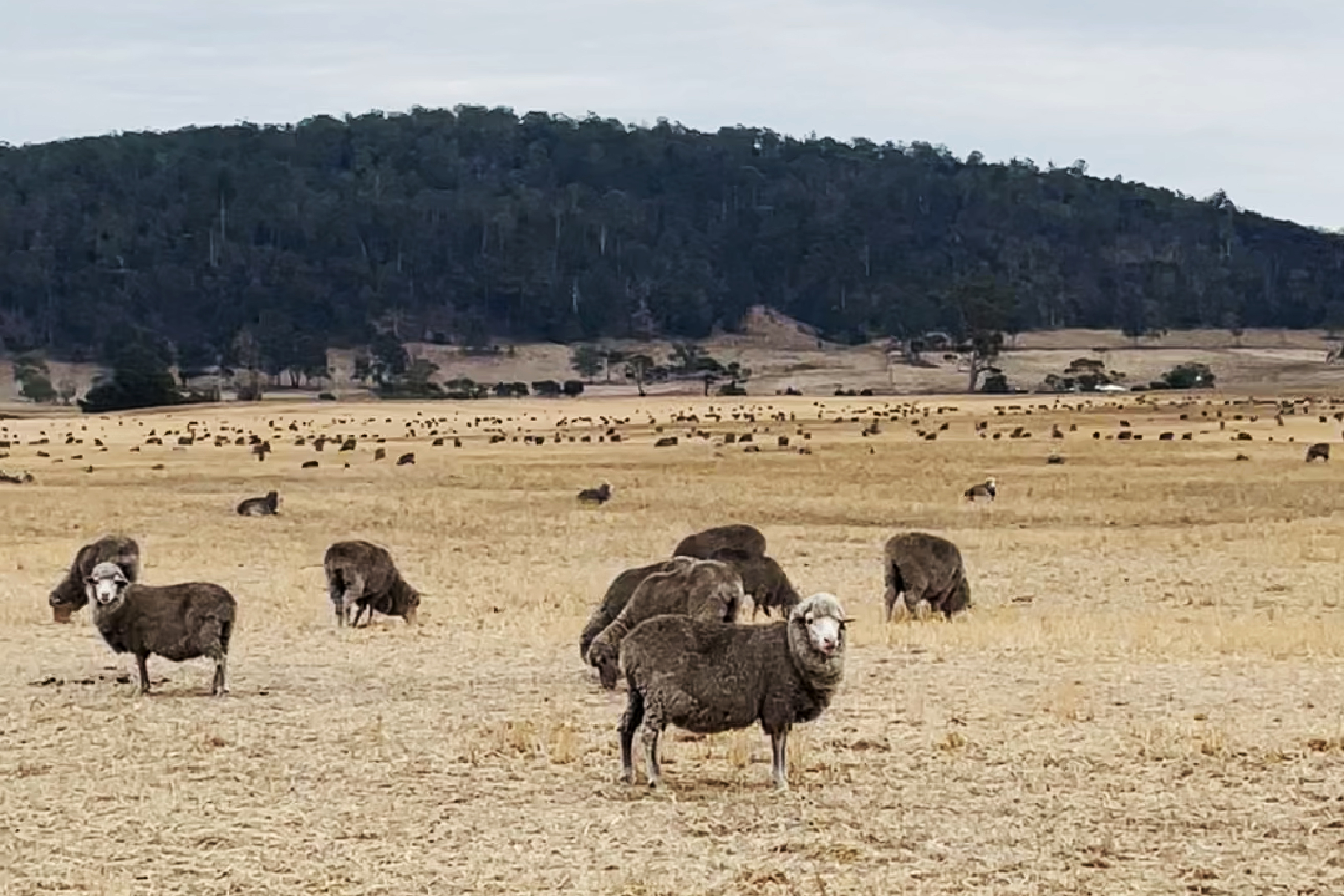
On Tasmania’s East Coast, the Fergusson family has developed a highly structured and disciplined approach to Merino breeding and selection, underpinned by a clear long-term objective, strategic selection index and visual classing information.
In their large-scale mixed farming business, wool remains a central pillar of the operation as seasons and commodity prices fluctuate.
“Merino sheep suit this country,” William Fergusson said. “They bring diversity into our business.”
During the past 30 years, the family has focused on achieving steady, consistent gains in productivity, with measurable improvements in fleece weight and bodyweight, alongside a steady reduction in fibre diameter.
A clear and consistent objective
At the core of the Fergusson family’s success is a well-defined breeding objective that supports annual selection and breeding decisions.
“Our current breeding objective is to hold our micron at 17 µm while increasing fleece weight, maintaining bodyweight and improving lambing percentages,” William explained.
“We’re focusing on a fine wool selection index with a 3% micron premium, which places emphasis on increasing fleece weight, while maintaining fibre diameter.
“Prior to this our selection index was a 9% micron premium, which put a heavier emphasis on lowering micron.
During the past 15 years, since adjusting their selection index, the average fleece weight of the Fergusson’s adult ewes has climbed form 3.9 kg/hd to around 5 kg/hd — a 32% increase (Figure 1).
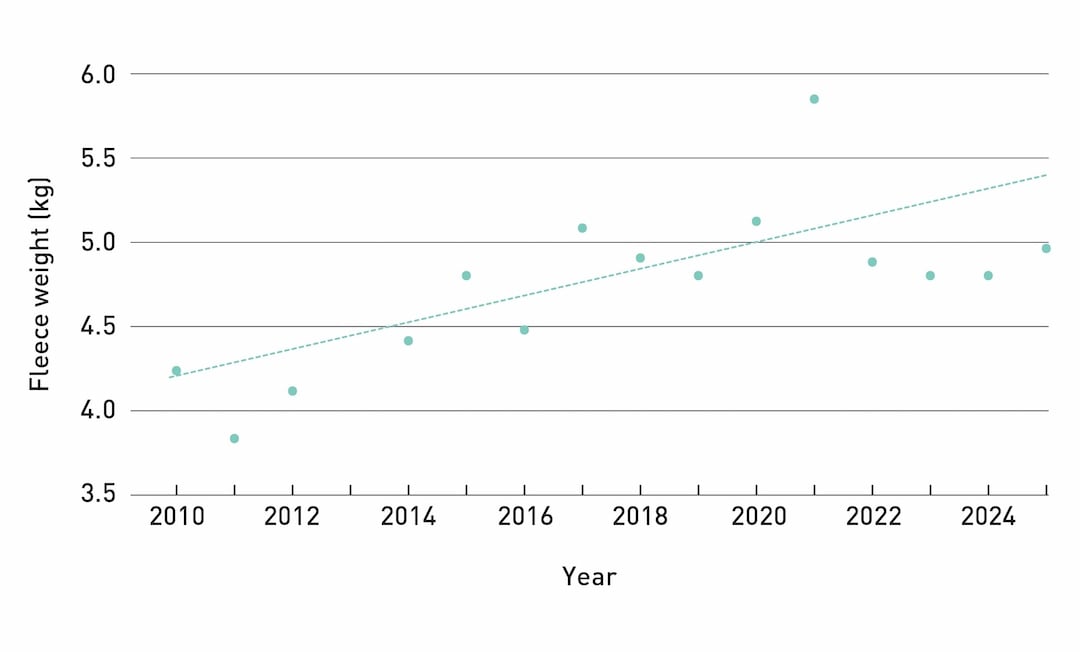
Figure 1. Average fleeceweight gains from 2010 – 2025 in adult ewes
“We are currently sitting at 16.5–17 µm in our adult sheep and cutting an average of 4.5 kg per head.
“In good seasons our adult wethers can cut up to 6 kg of wool — nothing keeps up with the Merino wethers when they cut that much.”
Rather than frequently shifting direction, the family prioritises long-term progress.
“Making the decision to change form a 9% micron to 3% took us several years. We eventually changed as we were increasingly disappointed with the premiums achieved for finer wools.
According to William, the benefits of using an objective index is that is gives woolgrowers control in the direction they want to head.
“We’d much rather develop a process that delivers consistent gain — like walking up the stairs, one step at a time,” William said.
“It's safe. You're not trying to leap five steps at once. You just have to make sure you take one step every year going in the right direction.”
This disciplined approach has helped ensure genetic gain is cumulative and aligned with the Fergusson’s production system and environmental constraints.
Combining objective measurement and visual classing
A key strength of the Fergusson family’s system is the integration of objective measurement data with visual assessment.

All ewe lambs are measured for fleece weight and fibre diameter at their first shearing, providing a robust dataset for comparison. These measurements are then combined with visual classing to determine each animal’s role within the flock.
Consultant Knox Heggaton, who has worked closely with the family for more than 30 years, plays a central role in the breeding and selection process.
“It’s not just about the numbers,” Knox explained. “We’re looking for a particular wool type — style, handle, colour and crimp definition—as well as structurally sound sheep.”
At classing, ewe hoggets are allocated into four groups:
- stud (replacement breeding flock)
- commercial flock
- terminal flock
- cull.
“The combination of objective data and what you physically see in the sheep is what makes the system work,” Knox said.
This balanced approach ensures both measurable traits and those harder-to-quantify characteristics are captured in selection decisions.
The role of eID and data
Electronic identification (eID) has been a cornerstone of the Fergusson family’s breeding program for more than 15 years, enabling accurate data capture and analysis.
“eID has been a game changer in terms of accuracy,” Knox said. “We used to see up to 10% human error when reading tags in the shed.”
The family collects data on:
- fleece weight
- fibre diameter and variation
- bodyweight.
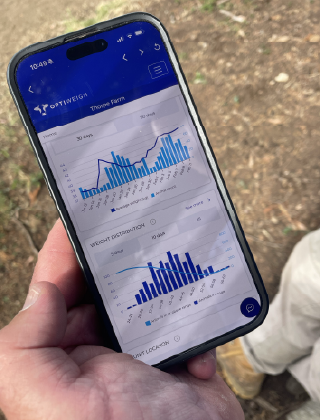
This information is analysed using livestock management software and linked back to individual animals.

“When we review the data, we’ve got fleece weight, fibre diameter and bodyweight all feeding into our final decisions,” William said.
Importantly, the data supports—but does not replace—visual assessment.
“You could draft purely on data,” Knox said, “but you’d miss the traits you can’t measure.”
Selecting for fertility through bodyweight
While wool traits remain important, the Fergusson family also places strong emphasis on bodyweight as a driver of reproductive performance.
“Most of the ewes that come into the stud are above-average bodyweight,” William explained. “It’ part of our strategy to lift lambing percentages.”
This reflects a practical, production-focused approach, linking selection decisions directly to whole-of-flock performance.
A structured classing and selection process
The Fergusson family’s breeding program follows a consistent annual cycle, ensuring all animals are assessed in a systematic way:
- Ewe lambs are measured at first shearing.
- Data is compiled and analysed.
- Visual classing is conducted several months later.
- Animals are allocated to their respective flocks.
- Stud ewes are allocated to specific sires to optimise genetic gain.
An important part of the process is defining how many animals are required in each group.
“The first question I ask William is how many studs, how many commercial and how many terminals,” Knox said.
This ensures Knox’s selection decisions are aligned with the operational needs of the business, not just the data.
Progeny testing and ram selection
Ram selection is another critical component of the Fergusson family’s breeding strategy.
Each year, the family retains a group of young rams from the stud flock, with a smaller number identified as the leading sires. These rams are then progeny tested by joining them to a random selection of stud ewes.
“We’re trying to remove as many variables as possible so the difference we see is due to the ram,” William explained.
By comparing progeny performance, the family can make more informed decisions about which genetics to retain and build on.
Integrating new genetics
While the Fergusson family breeds its own replacement rams, external genetics are introduced strategically through artificial insemination (AI) to create additional genetic gain.
“We’re always looking for genetics that align with our breeding objective,” William said.
A recent decision to change the external ram genetics has been guided by performance data, including wether trial results and an alignment between the source stud and the Fergusson family’s selection approach.
“We were looking for a stud that is achieving results that match what we’re trying to do,” William said. “And based on our recent results, we think we are on the right track.”

Consistency over time
A defining feature of the Fergusson family’s breeding program is its consistency.
“We’ve been working on this process for more than 30 years,” William said. “It’s a robust system.”
Rather than chasing rapid gains or short-term trends, the focus has been on steady, repeatable improvement.
“You won’t always hit your potential,” William said. “But if you keep heading in the right direction each year, you make progress.”
Key takeaways for woolgrowers
The Fergusson family’s approach highlights several key principles for Merino breeding and selection:
- Define a clear, long-term breeding objective and stick to it.
- Combine objective measurement with visual classing.
- Use eID to improve accuracy and decision-making.
- Select for traits that drive whole-of-flock performance, including fertility.
- Apply a consistent, repeatable process each year.
- Focus on steady, cumulative genetic gain.
This article first appeared in the AWI Extension TAS Newsletter April 2026. Reproduction of the article is encouraged and should be attributed as follows: This article was first published in the AWI Extension TAS Newsletter.