




Maximising your clip’s value: understanding wool prices and managing risk
The price you receive for your clip isn’t just about what the market does—it’s about how well your clip aligns with buyer demand. This article explores how to maximise returns by aligning your clip with market demand, the impact of staple strength and contamination control. It provides practical steps to move beyond production risk using tools like forward contracts and price hedging to protect margins and make informed decisions in a volatile global market.
Australian wool is traded globally, so many factors drive the price you receive for your clip, including clip quality, market signals and broader economic trends. Understanding what drives these prices—and where you can influence them—is key to protecting and improving your bottom line.
The key drivers of wool price
While markets fluctuate, the biggest influence on your return is still the quality of the wool you produce. These are the key traits buyers are paying (or discounting) for:
- Fibre diameter (micron): This remains the single biggest price driver. Finer wool attracts higher prices for next-to-skin garments, while broader wool relies more heavily on fleece weight to maintain value.
- For superfine wool (16.6–18.5 micron), aim for a staple strength above 35 N/ktex and a staple length between 70–90mm to maximise returns.
- For crossbred wool, keeping fleeces free of dark and medullated fibres is essential, as these can reduce the ability to produce pastel-coloured yarns and garments.
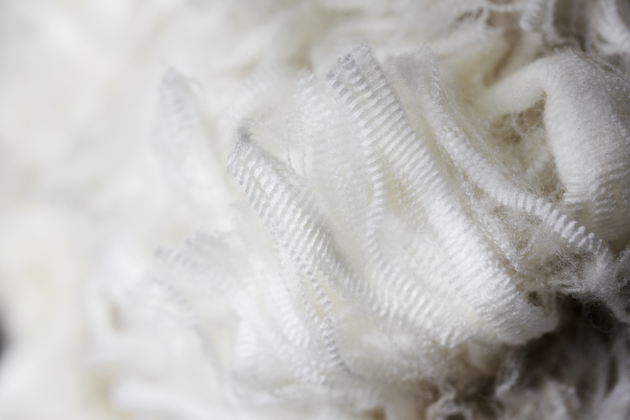
- Staple strength and position of break: Sound, even staples command a premium. Tender wool—particularly where the break occurs mid-staple—can attract significant discounts.
- Staple length: Length determines processing pathway. Most demand sits between 40–70mm, which is considered the market's ‘sweet spot.’ Targeting this range helps ensure your wool meets modern processing requirements, including the growing demand for knitwear.
- Contamination (vegetable matter, dust, etc.): Contamination quickly erodes value. Keeping vegetable matter low is especially critical for finer and specialty wool.
- Preparation and classing: Well-prepared, professionally classed clips consistently outperform. Small or poorly defined lines often get discounted.
Lighter individual bale weights can reduce returns due to increased per-kilogram handling costs. Similarly, blending wool to meet processor specifications can lead to unexpected price volatility at auction, so plan blending strategies carefully.
These characteristics are all largely driven by genetics, nutrition, shearing timing and clip preparation and remain the primary determinants of the price you will receive for your wool.
You can learn more about the features of wool that influence demand and price here.
Beyond the farm gate: market forces at play
Even the best clip is still subject to market conditions.
Short-term drivers
- Currency movements (especially the AUD).
- Processor demand and stock levels.
- Buyer competition at auction.
- These factors can shift prices quickly from week to week.
Long-term trends
- Increasing demand for lightweight, next-to-skin garments.
- Growth in knitwear and trans-seasonal apparel.
- Competition from synthetic fibres.
- Changing fashion trends and workplace norms.
- These longer-term shifts are driving sustained demand for finer microns and mid-length wool suited to modern processing systems.
Managing price risk (not just production risk)
Most woolgrowers focus heavily on production risk—but managing price risk can have just as much impact.
The wool sales pipeline exposes woolgrowers to a range of risks, including price volatility, production variability and market dynamics. Understanding these risks is the first step toward managing them effectively.
Tools to consider:
- Forward contracts: lock in a price ahead of sale.
- Options (minimum price contracts): protect downside while keeping upside.
- Pools: average out market volatility.
- Futures/hedging tools: more advanced strategies to manage exposure.
Risk management isn’t about predicting the market: it’s about putting a plan in place to manage uncertainty and protect margins. A structured approach to risk management, including understanding hedging principles and available tools, can significantly improve decision-making and price outcomes.
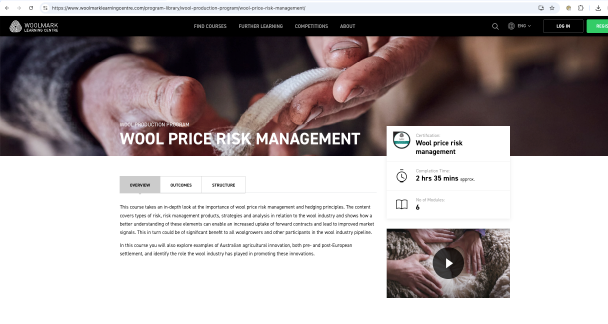 To develop a deeper understanding of how to manage wool price risk, the Woolmark Learning Centre offers a self-paced ‘Wool Price Risk Management’ course (approx. 2.5 hours), covering forward contracts, options and hedging principles.
Make sure you also speak to your broker to discuss strategies to manage your wool sales price risk going forward.
Turning insight into better decisions
Good decisions start with good data.
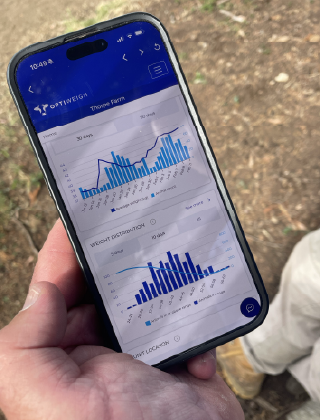
- Track your clip over time: Record micron, fleece weight, staple strength, and sale results each year. Over time, patterns emerge that highlight what’s driving your profitability.
- Use objective measurement: On-farm fibre testing can help identify your most productive and profitable sheep—not just the ones that “look good in the paddock.”
- Work closely with your broker: A good broker can help interpret market signals, optimise clip preparation and assess how management changes will impact your bottom line.
Also consider using the AWI Australian Wool Production Forecasting Committee report, published three times a year, to anticipate market supply trends and inform your wool selling decisions.
Key takeaways for Tasmanian woolgrowers
Maximising your wool income isn’t about chasing the market—it’s about consistency.
Produce a well-prepared, fit-for-purpose clip that aligns with market demand and combine that with a clear selling and risk management strategy. While you can’t control the market, you can control how well your business responds to it.
Here are the steps you can take this year to maximise the value from your clip:
- Micron and staple quality drive returns: Finer wool commands higher prices, but strong, consistent staples are essential to avoid discounts.
- Target the market sweet spot: Aim for staple lengths of 40–70mm to meet modern processing requirements.
- Minimise clip contamination: Keep vegetable matter low and maintain excellent clip preparation to protect value.
- Track and analyse your clip: Recording micron, fleece weight, and sale results over time helps identify the most profitable sheep and management practices.
- Manage price risk strategically: Use forward contracts, options, or pools and work closely with your broker to safeguard margins and make informed selling decisions.
To check out the sources used for this article and for more information, read the following:
- Knowing the features of wool that influence demand and price
- MMFS Module 2 Chapter 2.3 Maximise returns from your wool sales
- Wool price risk management course—Woolmark Learning Centre
This article was written by Georgia Pugh, AWI Extension WA and first appeared in the AWI Extension WA Newsletter April 2026. Reproduction of the article is encouraged and should be attributed as follows: This article was first published in the AWI Extension WA Newsletter.